Is bore water free? For household and stock use in NSW, the water itself mostly is: you don’t need to buy a water access licence to take it, and in most cases you don’t need a meter. But free water is not the same as a free bore. Building the bore costs money, and so does running it. Irrigation and commercial use are different again, because the water then needs a licence of its own.
Do you pay for bore water in NSW?
It depends on what the water is used for.
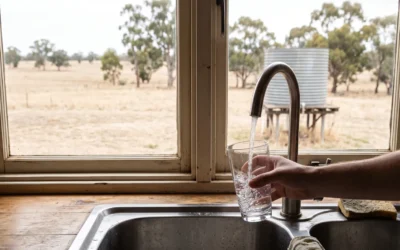
Household and stock use. If you own or occupy land over an aquifer, you have a basic landholder right to take groundwater for domestic use and for watering stock. The NSW Government’s domestic and stock rights FAQs confirm that a water access licence is not required for this water. Domestic use means the household: drinking, washing, the garden and a swimming pool. Stock means animals kept on the property. The FAQs are clear that it does not cover irrigating feed for stock or supplying an intensive commercial operation.
Irrigation and commercial use. The moment the water earns money, you need a water access licence. A water access licence is a property right. It sets the water source and the share of it you are entitled to, and it is bought, sold and held separately from the land. Most groundwater sources in NSW are fully allocated, so new licences are rarely issued. In practice, an irrigation entitlement usually means buying an existing licence on the market. If you only need water for one season, a temporary trade can cover you without buying a licence outright.
Either way, the bore itself needs approval. The same NSW Government FAQs say you need a water supply work approval to construct a groundwater bore, even under a basic landholder right. Our bore water licence NSW guide explains which approval and licence apply to your use, and we organise them through Water NSW.
Is bore water metered?
Not for household and stock use. The NSW Government FAQs say a water meter is not required for a bore used only for domestic and stock rights.
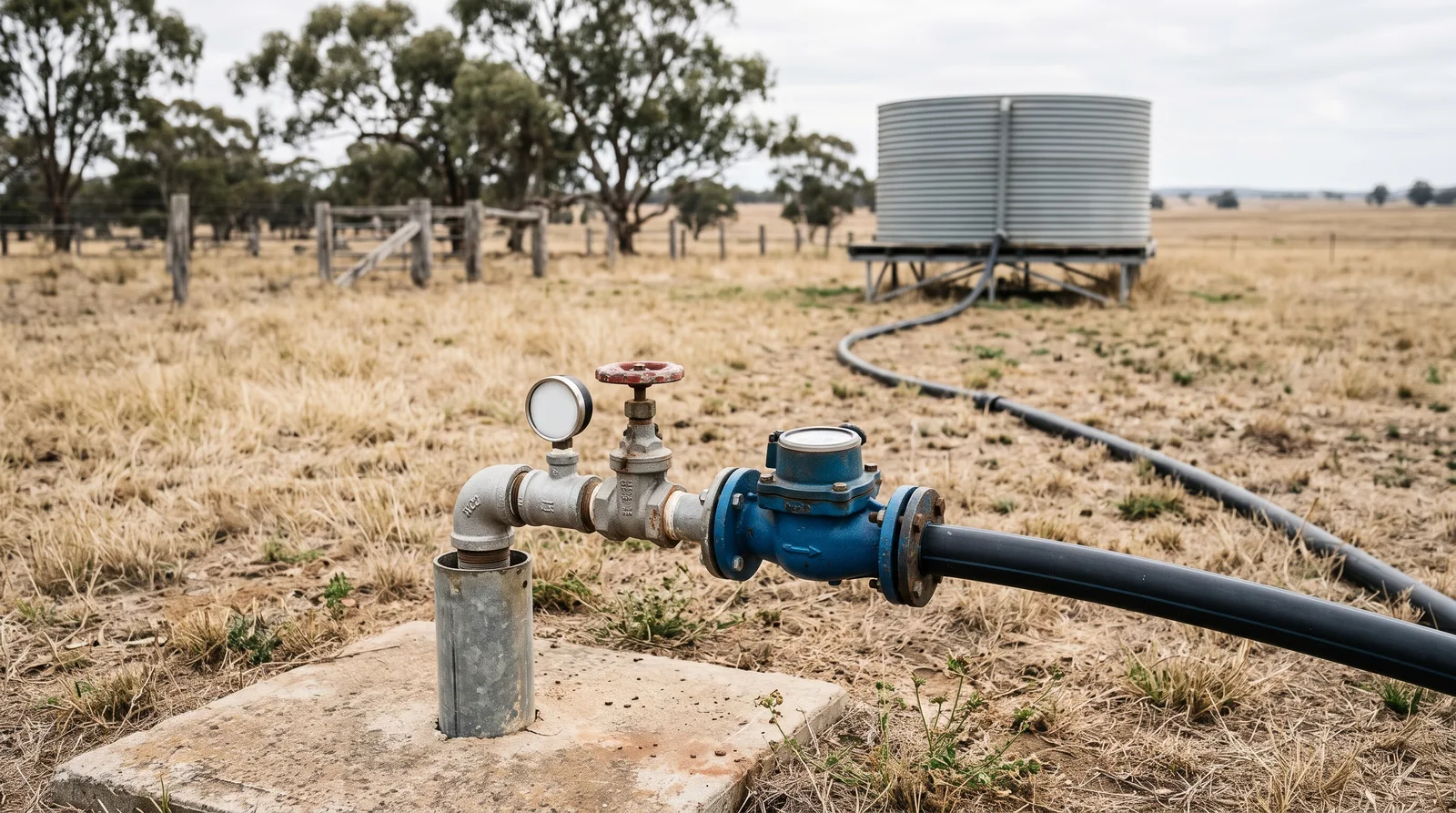
Licensed bores are different. Water access licences in NSW carry metering conditions, and the non-urban water metering rules require compliant meters on many bores. We supply and install meters that meet the NSW requirements and advise on telemetry where the rules call for it. If you are not sure which applies to your bore, our bore pump installation page explains it, or ask us.
What a bore costs to put in
This is where most of the money goes. Nobody can quote a bore honestly without seeing the site, but the cost always comes from the same four things:
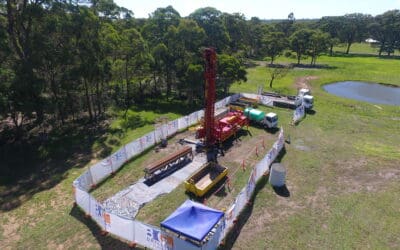
Mobilisation: getting the rig and crew to your property and set up
Drilling, charged by the metre, where the depth to water is the biggest variable
Construction materials: casing, screen, gravel pack and the seal
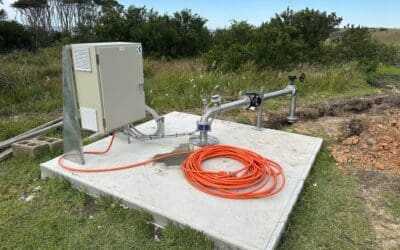
Pump and headworks, sized to the depth, the yield and how far the water has to travel
Most drillers bill every metre whether they find water or not. We don’t: if we drill and don’t hit water, you are not charged. Our water bore drilling page explains each cost and what to ask for in any quote.
What a bore costs to run
Once the bore is in, the running costs are mostly the pump and, if the water needs it, the treatment.
The pump. It needs power, and a pump that is the wrong size for the bore runs longer hours than it should. A correctly sized submersible pump in clean water commonly runs well over a decade. Running dry, pumping sand and being sized wrong in the first place are what shorten its life.
Servicing. We service pumps and irrigation on a schedule for farms, vineyards and commercial sites, with inspection and testing before each season.
Water treatment. If the water needs filtering or treating, the system needs looking after. Sediment filters and iron media need periodic replacement, disinfection units need annual attention and softeners need salt. Whether you need treatment at all comes down to a water test, which our guide to whether bore water is safe to drink explains. See how we design a system on our bore water filtration page.
The cheapest bore is one built right the first time
Most of the ongoing cost of a bore is decided before it runs. The most common bore pump failure we see is not a faulty pump. It is the wrong pump, chosen before anyone knew what the bore would give. We test pump every bore we equip, whether we drilled it or not, and size the pump from the sustainable yield, the standing water level and the drawdown. That is the difference between a bore pump installation that runs for fifteen years and one that fails in two.
Thinking about a bore? We handle the whole job, from the licence and the drilling to the pump and the water treatment. Call 0408 915 449 or book a free site assessment.