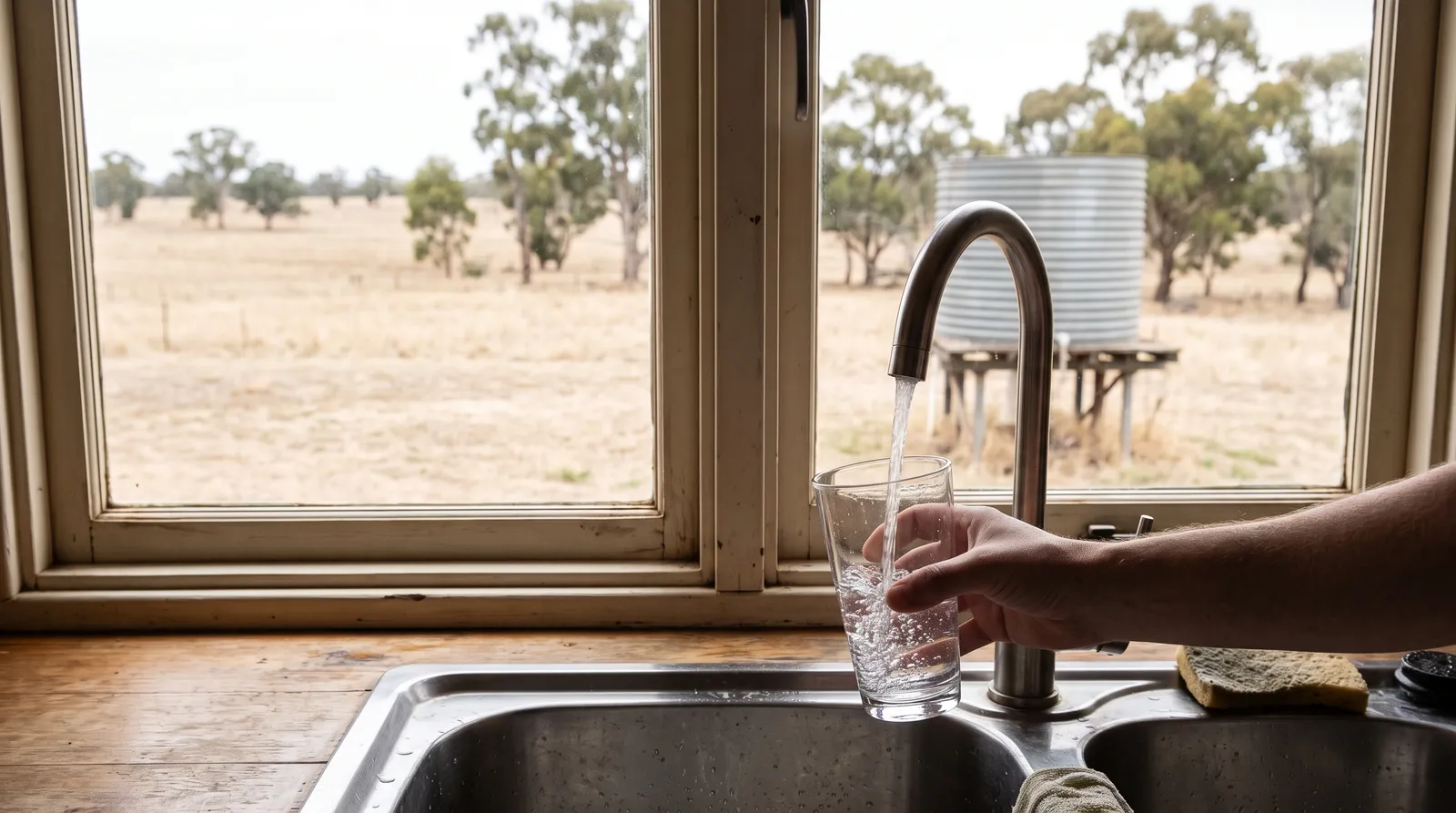
Is bore water safe to drink? Not automatically. Bore water can make good drinking water, but whether yours does depends on the aquifer it comes from and how the bore was built. The only way to know is to test it.
NSW Health recommends that groundwater is not used for drinking, cooking and personal hygiene, including cleaning teeth and bathing, without testing and appropriate treatment including disinfection. This guide covers what can be in bore water, how to get it tested and how it is treated to drinking standard.
Can you drink bore water?
Yes, once it has been tested and treated for what is actually in it. Most bore water can be brought to drinking standard with the right treatment.
The catch is that bore water chemistry varies enormously between aquifers. Iron, manganese, hardness and salinity are common, and bacteria can be present. What is in a neighbour’s bore tells you little about yours, which is why a test always comes first.
Does boiling bore water make it safe to drink?
Boiling kills bacteria, viruses and other microbes, so it deals with the microbial risk for as long as you keep doing it. It does nothing about the chemical side. Iron, manganese, hardness, salinity and metals are all still in the water after it has boiled.
NSW Health makes the same point about disinfection in general. Its groundwater treatment fact sheet says disinfection removes harmful microorganisms but does not remove chemicals, so other treatment may be needed as well. That is why the test comes first. If the results show only bacteria, disinfection may be all the water needs. If they show chemicals, boiling will not make it safe.
Boiling is also hard to keep up for a whole household. NSW Health includes cleaning teeth in the uses untreated groundwater should not be used for, so a kettle on the bench only covers part of the supply. A disinfection unit on the household supply, after the water has been filtered clear, treats everything that comes out of the taps.
What can make bore water unsafe to drink
NSW Health groups the risks in groundwater into two kinds: microbial and chemical.
Bacteria and other microbes
Microbial contaminants include bacteria, viruses and protozoa. Bores near septic systems or stockyards, or with failed headworks, can carry bacteria.
Where the bore sits matters. NSW Health recommends a groundwater source is uphill and at least 250 metres from any wastewater disposal system such as a septic tank and trenches. Where a bore goes matters more than almost anything else about it, which is why siting in water bore drilling includes setbacks from septic systems.
Chemicals from the ground and from land use
Some chemicals occur naturally in groundwater, including the minerals that cause hardness and salinity. Others come from what happens on the land above.
NSW Health lists arsenic, nitrate, chromium and other metals, PFAS and petroleum hydrocarbons among the chemicals that can turn up in groundwater. Sources include sewage and septic tanks, animal waste, fertilisers and pesticides, polluted stormwater and floodwater, landfill and leaking underground fuel tanks.
Iron, manganese, hardness and salinity
Iron and manganese are the most common bore water complaint in NSW. They leave rust coloured staining on fixtures and washing, a metallic taste, and black or brown deposits in tanks and pipework.
Hardness comes from calcium and magnesium and builds scale in hot water systems, kettles and pumps. Dissolved salts affect taste.
How to test bore water
A laboratory analysis is the first step, and it is a small cost relative to any treatment system. A standard bore water analysis checks iron, manganese, hardness, pH, turbidity, total dissolved solids and bacteria. NSW Health recommends testing the microbiological, chemical and radiological quality of groundwater before it is used for drinking.
Without the numbers, any treatment system is a guess. The results tell you what the water needs and, just as usefully, what it does not.
If BG Water Solutions drilled your bore, the water test is part of the job. If we did not, bring us the bore and we will test it.
How bore water is treated to drinking standard
Treatment is matched to the test results and to the use. Water for a household has to meet drinking water guidelines, so a household system brings bore water to drinking standard with whichever of these the results call for:
- sediment filtration
- iron and manganese removal
- softening
- disinfection, once the water has been filtered clear
The system is plumbed in after the pump and before the tanks, and sized to the bore’s actual yield and the property’s peak demand. A treatment system that cannot keep up with the pump starves the supply. Once it is running, a second analysis confirms the water is what the system was designed to deliver.
How to remove iron from bore water
Dissolved iron oxidises when the water meets air, which is what turns fixtures and washing orange. It is treated by oxidation and filtration, sized to the iron concentration in your water.
Keeping the system working
Sediment filters and iron media need periodic replacement, disinfection units need annual attention and softeners need salt. The schedule depends on the system and the water, and we set it when we install.
Is bore water safe to shower in?
It depends on what is in it, the same as for drinking. NSW Health lists drinking, inhalation and skin contact as the ways people can be exposed to contaminated groundwater, and recommends that untreated groundwater is not used for personal hygiene, including bathing. If a test shows bacteria or a chemical of concern, the water needs treating before it reaches the shower as well as the kitchen tap.
Most shower complaints about NSW bore water are about the bathroom rather than health. Iron and manganese leave rust coloured staining on fixtures and washing, and hard water builds scale in the hot water system and the kettle. Iron and manganese are treated by oxidation and filtration, and hardness by softening. The same water test shows which of these your water needs.
Get your bore water tested
BG Water Solutions tests and treats bore water for households, stock, irrigation and commercial use across NSW and the ACT, alongside our drilling and pump work since 2008. See how a system is designed on our bore water filtration page. If you are still planning a bore, start with what bore water is and where it comes from.
Not sure what is in your bore water? Call 0408 915 449 or send an enquiry and we will arrange a water test.